

Food insecurity is a chronic problem in Avery County and the surrounding western North Carolina area. In western North Carolina, 1 in 5 people, including children do not have access to 3 square meals a day. This is significantly higher than the national average. Nationwide, 1 in 9 people and 1 in 6 children struggle with hunger.
Lay-offs at work, unexpected car maintenance or an accident on the job can suddenly force a family to choose between buying food and other basic necessities such as housing or healthcare. One bad month can be enough to plunge a household into food insecurity – but some people, including children and seniors, may be at a greater risk of hunger than others. The USDA defines food insecurity as limited or uncertain access to enough food for all members of a household to live an active, healthy lifestyle.
WNC has higher rates of food insecurity than the national average due to 4 main factors that contribute to local and regional poverty: low wages, lack of affordable housing, poor public transportation, as well as the high cost of childcare. Hunger and health are deeply connected and can be life-altering. When people don’t have enough food or have to choose inexpensive foods with low-nutritional value, it can seriously impact their health. And once the cycle of poor diet and poor health begins, it can be a hard cycle to break. Healthy bodies and minds require nutritious meals at every age, which is why FAF is taking great strides to provide more nutritiously dense foods and fresh produce.
Approximately 3,000 (17%) of Avery County residents experience some degree of uncertainty about their next meal during the year. This includes between 750 and 1,000 children.
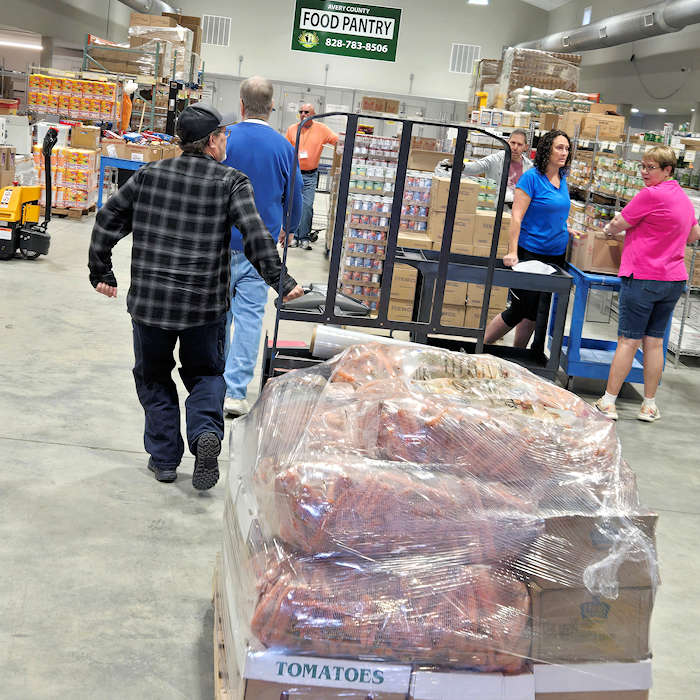
Feeding Avery Families is committed addressing food insecurity through a variety of Food Distribution and Community Outreach programs.
Read more: 2025 Impact Report – Feeding our Neighbors